Elon Musk Hair Transplant: 5 Real Cost & Surgery Secrets
A breakdown of the procedures, cost estimates, and timeline behind the tech billionaire's famous hairline transformation.
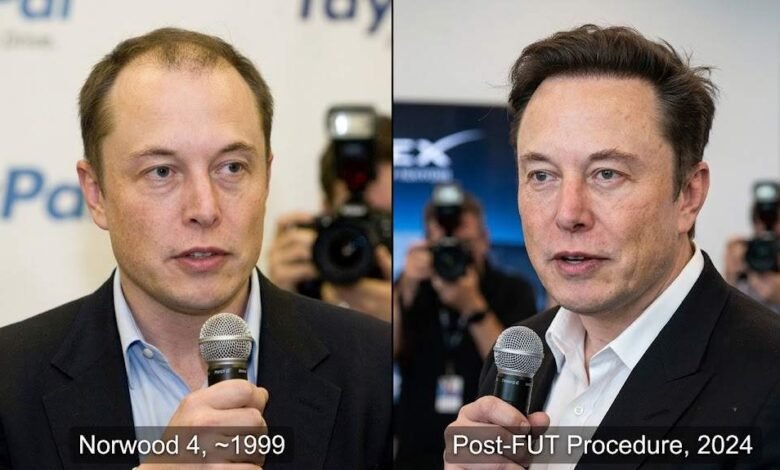
The rumors surrounding an elon musk hair transplant are almost as famous as his tech companies. In the late 1990s, public photographs showed the young billionaire with a deeply receding hairline and advanced male pattern baldness. Fast forward to today, and he has a dense, youthful head of hair. While he has never publicly confirmed undergoing surgery, cosmetic surgeons and hair restoration experts widely agree that a medical procedure took place. If you are noticing your own hair thinning and wondering how he pulled off this transformation, you need to understand the medical methods and financial costs involved.
Experts believe the elon musk hair transplant took place in the early 2000s. Based on photographic evidence, surgeons estimate he received between 4,000 and 5,500 grafts using the Follicular Unit Transplantation (FUT) method. The total cost for his hair restoration likely ranged from $20,000 to $40,000 at a premium US clinic.
Key Takeaways
-
Musk has never officially confirmed his hair restoration surgery.
-
Photos from the late 1990s show him at a Norwood 4 level of baldness.
-
Experts suspect he underwent a Follicular Unit Transplantation (FUT) procedure.
-
He likely needed multiple surgeries and up to 5,500 total grafts.
-
Premium hair transplants of this size in the US can cost upwards of $40,000.
-
Maintaining surgical results usually requires ongoing, FDA-approved medications.
The Hair Loss Timeline: From PayPal to SpaceX
When analyzing the elon musk hair transplant theories, visual evidence is the strongest tool we have. Hair loss experts use the Norwood Scale to measure the severity of male pattern baldness. By tracking his public appearances, we can map out a timeline of his hair restoration journey.
| Era | Estimated Age | Norwood Scale Level | Visible Changes |
| Late 1990s (PayPal) | 28 | Norwood 4 | Deep receding temples, noticeable thinning on the frontal scalp. |
| Early 2000s | 32 | Norwood 2 to 3 | Early density improvements, slightly lowered and reinforced hairline. |
| 2010s (Tesla growth) | 39 | Norwood 1 to 2 | Thick frontal coverage, natural appearance with no see-through effect. |
| 2020s to Present | 50+ | Norwood 1 | Sustained density and thickness, suggesting follow-up maintenance. |
Advanced male pattern baldness (androgenetic alopecia) does not reverse itself naturally. To go from a Norwood 4 back to a Norwood 1 requires significant medical intervention.
Which Procedure Did He Get?
Hair transplant surgery typically falls into two categories: Follicular Unit Extraction (FUE) and Follicular Unit Transplantation (FUT). Both methods move healthy hair follicles from the back of the head to the thinning areas at the front.
Medical experts who have reviewed photos of the billionaire suggest he opted for FUT, also known as strip surgery. In recent years, photos of his tightly shaved sides revealed a thin, linear scar across the back of his scalp. This type of scarring is a direct signature of the FUT method.
Here are three reasons why the FUT method aligns with his results:
-
Era availability: In the early 2000s, FUT was the gold standard in hair restoration. The modern FUE method existed but was still in its early stages and rarely practiced for large-scale restorations.
-
High graft yield: FUT allows surgeons to harvest a massive amount of grafts in a single session. Experts estimate his level of hair loss required anywhere from 4,000 to 5,500 grafts.
-
Severe baldness suitability: For patients with extensive hair loss like a Norwood 4, FUT often provides the raw volume needed to build a dense, natural-looking hairline quickly.
Pro Tip: If you are considering a hair transplant today, modern FUE techniques do not leave a linear scar. Many top US clinics now prefer FUE for patients who like to wear their hair short on the sides and back.
The Cost of a Billionaire’s Hairline
Getting a premium hair restoration is a major financial investment. The cost of an elon musk hair transplant is widely debated, but experts can estimate the price based on his required graft count and typical US clinic rates.
At a high-end clinic in a major US city, surgical grafts typically cost between $5 and $8 each. If he required 5,000 grafts split across two procedures, the total bill likely landed between $25,000 and $40,000. This estimate accounts for surgeon expertise, facility fees, and post-operative care. While this is a massive expense for the average person, it is a highly realistic price point for premium, undetectable cosmetic surgery in the United States.
Did Medication Play a Role?
A common mistake people make is assuming that a hair transplant is a permanent, one-and-done cure for baldness. This is mathematically and medically incorrect.
Hair transplants only move DHT-resistant hair to bald spots; they do not stop the native hair currently on your head from falling out. If a patient gets surgery but skips preventative medication, the original hair behind the transplanted hairline will continue to thin. This often leaves an unnatural patch of thick hair at the front and a bald spot directly behind it.
To maintain his density over two decades, specialists strongly believe he relies on FDA-approved treatments for hair loss like Finasteride (Propecia) or Minoxidil (Rogaine). These medications help stop further loss and protect the remaining native hair. For US patients, board-certified dermatologists consider these medications a standard requirement following any hair restoration surgery.
Conclusion & Next Steps
The evidence supporting an elon musk hair transplant is overwhelming, even without his public confirmation. Through what appears to be a well-executed FUT procedure and ongoing medical maintenance, he successfully reversed aggressive hair loss and maintained a natural appearance for over two decades.
If you are dealing with a receding hairline and want to explore your options, take these three actionable steps:
-
Consult a medical professional: Before considering surgery, get an official diagnosis for your hair loss from a licensed dermatologist.
-
Start preventative treatments early: Ask your doctor about FDA-approved medications like Finasteride or Minoxidil to preserve the hair you still have.
-
Research modern clinics: If you want to restore lost hair, schedule consultations with reputable, surgeon-led clinics in the US to get an accurate graft estimate.
[FAQs}
No, he has never publicly confirmed undergoing any hair restoration surgery. All claims are based on photographic evidence and expert opinions from top cosmetic surgeons.
Based on his Norwood 4 hair loss in the late 1990s, experts estimate he received between 4,000 and 5,500 grafts to achieve his current density.
While exact numbers are unknown, a multi-session transplant of that size at a premium US clinic typically costs between $20,000 and $40,000.
Photographs showing a faint linear scar on the back of his head suggest he underwent a Follicular Unit Transplantation (FUT) procedure, which was the standard method during the early 2000s.
No. Advanced male pattern baldness (androgenetic alopecia) is a genetic condition that does not reverse naturally. Significant regrowth requires medical intervention.
The transplanted hairs are usually permanent because they are taken from areas resistant to balding. However, you must take medication to stop your remaining natural hair from falling out.
Experts track the beginning of his visible hair transformation to the early 2000s, shortly after his time at PayPal.