Olivia Rodrigo Taylor Swift Credits: 3 Shocking Truths
Discover why a breakout pop star voluntarily gave away millions in publishing royalties without ever facing a formal lawsuit.
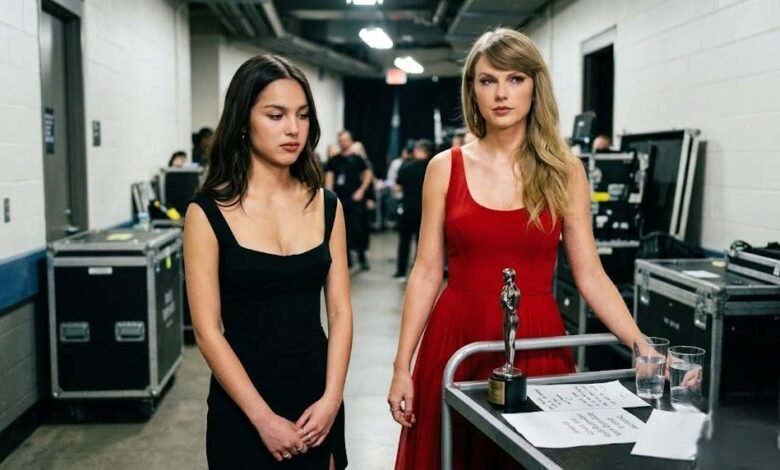
The debate surrounding the Olivia Rodrigo Taylor Swift credits remains one of the most discussed topics in the modern music business. When Rodrigo released her record-breaking debut album Sour, she retroactively gave Swift co-writing recognition on two major tracks. Why did a breakout artist give away millions in royalties before facing a formal lawsuit?
Olivia Rodrigo retroactively awarded Taylor Swift songwriting credits on two hit songs: “1 Step Forward, 3 Steps Back” and “Deja Vu.” Rodrigo made this decision to avoid expensive copyright infringement lawsuits following public comparisons to Swift’s tracks “New Year’s Day” and “Cruel Summer.”
Key Takeaways
-
Proactive protection: Rodrigo’s team offered credits voluntarily to prevent legal disputes.
-
Two specific songs: Swift holds co-writer status on “1 Step Forward, 3 Steps Back” and “Deja Vu.”
-
Financial sacrifice: Adding writers retroactively reduces the original creators’ royalty shares.
-
Industry shift: A recent federal court ruling forces many artists to settle copyright claims early.
-
No actual lawsuit: Swift never took Rodrigo to court over these songs.
Why the Olivia Rodrigo Taylor Swift Credits Happened
To understand how we arrived here, you have to look at how pop music gets made today. When Sour dominated the charts in 2021, listeners quickly noticed musical similarities between Rodrigo’s hits and older songs.
Instead of fighting the comparisons, Rodrigo’s management took a defensive route. They finalized the Olivia Rodrigo Taylor Swift credits after the album was already breaking streaming records. This process involved two entirely separate tracks.
-
“1 Step Forward, 3 Steps Back”
Rodrigo built this track around the piano chords from Swift’s 2017 song “New Year’s Day.” Because she used the actual melody and chord progression, she secured permission and credited Swift and Jack Antonoff from the day the album launched.
-
“Deja Vu”
This situation unfolded differently. Fans noticed the yelling vocal delivery in the bridge of “Deja Vu” sounded exactly like Swift’s 2019 hit “Cruel Summer.” Two months after releasing the album, Rodrigo officially added Swift, Antonoff, and St. Vincent to the song’s registry.
The Misconception About a Lawsuit
Many fans assume Swift sued Rodrigo for these rights. This is entirely false. Swift never filed a copyright infringement lawsuit. Rodrigo’s management team proactively offered the Olivia Rodrigo Taylor Swift credits. They did this to avoid potential legal disputes that could stall her soaring career.
The Financial Impact of Retroactive Royalties
Giving up a writing credit is an expensive choice. In the music industry, songwriters earn mechanical and performance royalties every time a track streams, plays on the radio, or sells a physical copy. In the United States, performance rights organizations like ASCAP and BMI track and distribute these funds.
When you add new writers to a registered track, the original creators lose a massive percentage of their income. We can see how the royalty splits shifted by looking at the official writing credits before and after the controversy.
| Track Name | Original Credited Writers | Writers Added Retroactively | Original Song Interpolated |
| 1 Step Forward, 3 Steps Back | Olivia Rodrigo | Taylor Swift, Jack Antonoff | “New Year’s Day” (2017) |
| Deja Vu | Olivia Rodrigo, Dan Nigro | Taylor Swift, Jack Antonoff, St. Vincent | “Cruel Summer” (2019) |
| Good 4 U | Olivia Rodrigo, Dan Nigro | Hayley Williams, Josh Farro | “Misery Business” (2007) |
Pro-tip: If you are an independent musician, always clear your samples and interpolations legally before releasing music. Fixing credits retroactively will cost you heavy financial leverage.
How Copyright Law Forced This Decision
You might wonder why artists give up millions without a fight. The answer lies in recent legal history. The infamous “Blurred Lines” lawsuit changed how the music business handles plagiarism.
In that case, a federal jury awarded Marvin Gaye’s estate millions because Robin Thicke and Pharrell Williams copied the “vibe” of a song, rather than the exact sheet music. Legal scholars documented how this terrified record labels in the Columbia Journal of Law & the Arts. Today, if a new pop song even remotely sounds like an older hit, lawyers advise artists to settle immediately.
The Olivia Rodrigo Taylor Swift credits are a direct result of this fearful environment. Rodrigo was a brand-new artist with everything to lose. A drawn-out legal battle would have cost her millions in legal fees and generated terrible press.
The Cultural Fallout: How Fans Reacted
The financial decisions quickly morphed into pop culture drama. Fans of both artists spent months analyzing the Olivia Rodrigo Taylor Swift credits. They dissected TikTok videos, award show interactions, and interview quotes looking for signs of a feud.
Despite the internet frenzy, this was always a business transaction. Pop stars rarely handle these negotiations directly. Managers, publishers, and entertainment attorneys hash out the percentages behind closed doors. The public drama simply overshadowed the standard legal procedure taking place in the background.
What This Means for Future Pop Artists
The music business thrives on inspiration. However, the line between paying homage and committing copyright infringement is thinner than ever before.
When you look at the Olivia Rodrigo Taylor Swift credits, you see a blueprint for how future pop stars will handle disputes. Labels will prioritize quick settlements over risky court trials. Protecting a song’s momentum is now more important than fighting over the exact origin of a melody.
Next Steps for Aspiring Songwriters
-
Run a pre-release audit: Have an entertainment attorney review your tracks for accidental similarities to popular songs.
-
Negotiate early: If you intentionally interpolate a song, secure permission before releasing your track to retain better royalty rates.
-
Document your process: Keep voice memos and lyric drafts to prove you created your melodies independently.
[FAQs]
No. Taylor Swift never filed a lawsuit against Olivia Rodrigo. Rodrigo’s team proactively added Swift to the credits for “Deja Vu” to avoid any potential legal action from Swift’s publisher.
While exact financial contracts remain private, industry experts estimate that Swift and her co-writers earn millions from their share of the publishing royalties on “Deja Vu” and “1 Step Forward, 3 Steps Back.”
A sample uses the actual recorded audio of a previous song. An interpolation involves re-recording a melody or lyric from an older song from scratch, which is exactly what happened with the Olivia Rodrigo Taylor Swift credits.
Similar to the Swift situation, listeners noticed “Good 4 U” sounded heavily like Paramore’s 2007 hit “Misery Business.” Rodrigo’s team retroactively gave Hayley Williams and Josh Farro co-writing credits to prevent a lawsuit.
Neither artist has publicly spoken about a personal feud. They have simply stopped interacting publicly. This lack of interaction sparked heavy internet rumors, but nothing is officially confirmed by either camp.
Yes, Rodrigo co-wrote every single track on Sour. However, because she interpolated melodies and vocal rhythms from other artists, she had to legally share the final songwriting credits with them.
Yes, an artist can refuse to hand over credits. If they refuse, the other party can take them to federal court for copyright infringement. This is a very expensive and risky choice that labels try to avoid.