Total Rail Solutions: U.S. Rail Buyers’ 2026 Checklist
A practical business framework for rail infrastructure, maintenance, safety, freight service, workforce, and project-risk decisions.
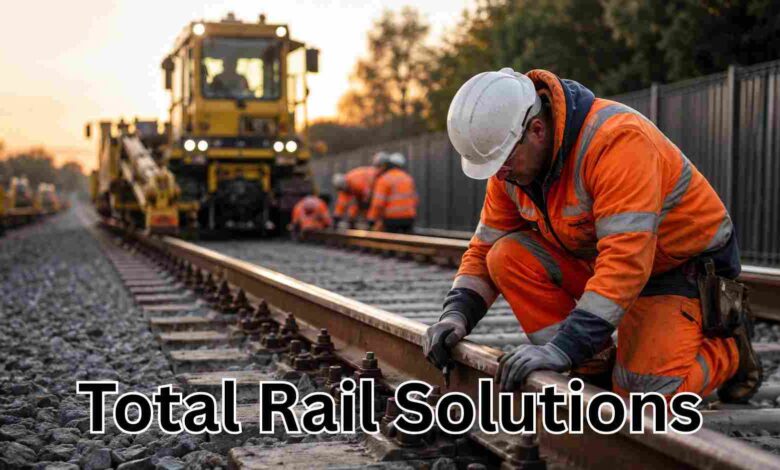
The phrase total rail solutions sounds simple, but U.S. rail buyers should treat it as a serious business framework. The U.S. freight rail network runs on almost 140,000 route miles, with seven Class I railroads, 22 regional railroads, and 584 local or short-line railroads, according to the Federal Railroad Administration in 2025. :Federal Railroad Administration freight rail overview
That scale creates opportunity, but it also creates risk. A rail project can stall when infrastructure, maintenance, safety, freight logistics, workforce planning, and reporting are handled as separate problems.
This article explains what buyers should expect from a full rail-service partner in the U.S. market, how to evaluate providers, and which official rail data points can help you make a safer business decision.
What Total Rail Solutions Means in the U.S. Rail Network
Total rail solutions as a service concept, not just a company name
In this article, total rail solutions means an integrated rail-service model. It includes rail infrastructure solutions, freight rail services, rail maintenance services, railway safety solutions, rail logistics solutions, workforce support, equipment planning, and project controls.
That distinction matters. Search results for this phrase include generic guides, overseas companies, and historical UK business references. A U.S. buyer should not assume that every result refers to a verified U.S. provider.
Why the keyword is confusing in search results
Some results use the phrase as a broad industry concept. Others refer to companies outside the U.S. market.
For example, UK Total Rail Solutions was acquired by Readypower Group in 2023, which makes brand-specific interpretation risky for a U.S. business reader.Readypower acquisition announcement
So the smarter approach is to evaluate the phrase by service capability, not by name alone.
Why Rail Infrastructure Solutions Matter for U.S. Freight Rail Services
The U.S. freight rail network is large, private, and operationally complex
Rail is not a small niche in American logistics. The FRA describes the U.S. freight rail network as nearly 140,000 route miles and part of an industry operated by Class I, regional, and short-line railroads. FRA freight rail data
This structure matters because different railroads handle different parts of the network. A national Class I carrier, a short-line railroad, and an industrial site owner may all touch the same freight movement.
A rail-service partner must understand that operating reality before promising a solution.
Rail infrastructure solutions affect supply chains, ports, and industrial sites
Rail infrastructure includes more than track. It can involve sidings, terminals, crossings, bridges, yards, drainage, loading zones, intermodal connections, and industrial spurs.
For shippers, poor infrastructure can delay cars, increase maintenance costs, and weaken service reliability. For investors and contractors, weak planning can turn a simple upgrade into a costly operational problem.
The U.S. Department of Commerce notes that from 1980 to 2023, America’s freight railroads spent about $810 billion on locomotives, freight cars, tracks, bridges, tunnels, and other infrastructure and equipment, citing AAR data. U.S. International Trade Administration freight rail services
Core Rail Maintenance Services Buyers Should Expect
Preventive, corrective, and emergency maintenance
Rail maintenance services should cover three practical needs:
| Maintenance type | What it means | Why it matters |
|---|---|---|
| Preventive maintenance | Scheduled inspections and planned repairs | Reduces avoidable failures |
| Corrective maintenance | Repair after a defect is found | Restores safe operation |
| Emergency maintenance | Urgent response after failure or disruption | Limits downtime and risk |
A capable provider should understand track condition, switches, ballast, rail joints, drainage, crossings, signaling support, and equipment readiness.
Why maintenance cannot be separated from safety
Maintenance is not just a cost line. It is a safety control.
A buyer who treats maintenance as a one-time repair may miss deeper risks, such as recurring track defects, poor documentation, weak inspection routines, or unplanned service interruptions.
Common mistake: Choosing a provider only because equipment is available or the price looks low. Rail work also needs trained crews, access planning, safety documentation, supervision, and long-term maintenance controls.
Railway Safety Solutions and Compliance in the USA
Safety must be built into every rail project stage
Railway safety solutions should start before crews arrive on-site. Planning should include job briefings, safe access, equipment checks, worker qualifications, emergency response procedures, and clear reporting lines.
Technology can support safety, but it cannot replace disciplined operations. The FRA states that Positive Train Control systems are designed to prevent train-to-train collisions, over-speed derailments, incursions into work zones, and movement through switches left in the wrong position. FRA also reported that PTC was in operation on all 57,536 required freight and passenger route miles by December 2020. FRA Positive Train Control
What buyers should ask before hiring a rail-service partner
Before signing a contract, ask:
- Who supervises field safety?
- Are crews trained for the work being performed?
- How are job briefings documented?
- What happens during an emergency repair?
- Does the provider track incidents, defects, and corrective action?
- Can the provider coordinate safely with railroads, yards, and industrial sites?
A serious provider should answer clearly, not vaguely.
Rail Logistics Solutions for Freight, Industrial Sites, and Intermodal Movement
Rail logistics is more than moving freight
Rail logistics solutions involve coordination. They connect shippers, carriers, terminals, yards, warehouses, trucking partners, and industrial facilities.
A business may need help with car movement, rail spur planning, terminal access, loading coordination, or intermodal freight decisions. The service partner should understand the movement of goods, not only the physical track.
When businesses need integrated rail logistics support
Integrated support becomes valuable when a company is planning:
- A new industrial rail spur
- A short-line connection
- A yard upgrade
- An intermodal shipping strategy
- A maintenance contract renewal
- A service reliability review
A practical example: a manufacturer adding rail access to a plant should not only ask, “Can someone build this track?” The better question is, “Can this partner help us design, maintain, staff, document, and operate this rail connection safely over time?”
Rail Project Management: How Total Rail Solutions Reduces Fragmentation
The problem with using disconnected vendors
Disconnected vendors can create gaps. One contractor handles track. Another handles equipment. A third handles maintenance. Someone else manages safety paperwork.
That may work for small tasks, but it can fail on complex rail projects. The biggest risks are unclear accountability, schedule conflicts, missing documentation, duplicated costs, and weak handoff after the job.
What strong rail project management should include
Strong rail project management should include:
- Clear scope and deliverables
- Access planning
- Crew scheduling
- Equipment planning
- Safety documentation
- Budget tracking
- Status reporting
- Maintenance handoff
- Emergency response planning
- Long-term performance review
A provider offering integrated rail project management should make coordination easier, not more complicated.
Rail Workforce Training and Equipment Capacity: The Overlooked Risk
Why workforce planning matters in rail projects
Rail workforce training matters because qualified labor is not unlimited. The U.S. Bureau of Labor Statistics reported 77,900 railroad worker jobs in 2024, median annual pay of $75,680 in May 2024, projected employment growth of 1% from 2024 to 2034, and about 6,600 projected annual openings. BLS railroad workers outlook
That data should make buyers cautious. A provider may own equipment, but equipment does not complete work by itself.
Equipment is only useful when qualified crews are available
Rail projects need qualified operators, inspectors, maintenance workers, supervisors, safety leads, and project managers.
Buyer check: Ask who will actually perform the work, what training they have, and how the provider handles backup staffing if schedules change.
A strong provider should prove both equipment capacity and workforce capacity.
Service Reliability: STB Rail Service Data Buyers Should Understand
Why service-performance reporting matters
Service reliability affects shippers, industrial sites, and logistics managers. The Surface Transportation Board requires Class I rail carriers to submit weekly reports with rail service performance data. These reports give the agency and the public more real-time visibility into Class I industry performance.STB rail service data
This does not replace provider due diligence, but it helps buyers understand the language of rail-service performance.
Metrics to understand before judging rail-service reliability
Key rail-service metrics include:
- Train speed
- Terminal dwell time
- Cars online
- Local service performance
- Industry spot-and-pull
- Origin dwell
- Chicago gateway performance
The STB reporting framework helps buyers move past vague claims such as “reliable service” and ask better questions about measurable performance.
Technology in Rail Maintenance Services: Useful, but Not Magic
Predictive maintenance, sensors, AI, and digital reporting
Technology can help rail maintenance services. Sensors, digital reports, inspection tools, asset records, and predictive maintenance systems can improve visibility.
But buyers should avoid unsupported claims. A vendor should not promise guaranteed cost savings or perfect uptime without verified data.
What technology should prove to the buyer
Useful technology should prove:
- Better maintenance history
- Faster issue detection
- Cleaner documentation
- Safer planning
- Stronger reporting
- Clearer asset visibility
If the technology cannot produce better decisions, it is just a sales feature.
How to Evaluate a Total Rail Solutions Partner in the USA
Step 1: Define the business and rail-service need
Start with the actual business problem. Are you moving freight, upgrading track, improving safety, adding an industrial spur, renewing a maintenance contract, or reducing service disruption?
A clear need prevents vague proposals.
Step 2: Audit infrastructure, maintenance, and safety risk
Review track condition, access points, drainage, equipment needs, worker exposure, emergency access, and documentation gaps.
This audit should happen before final pricing.
Step 3: Review service reliability and reporting
Ask for sample reports. A provider should explain what it tracks, how often it reports, and how it handles issues.
A buyer should also understand how provider reporting connects to broader freight rail services and carrier performance.
Step 4: Check workforce, equipment, and project controls
Ask who will do the work, what equipment is available, and how schedules are controlled. Confirm whether subcontractors are involved.
A complete answer should include staffing, equipment, supervision, safety, and escalation procedures.
Step 5: Build a long-term maintenance and performance plan
The best rail partners do not disappear after the first job. They help build an inspection cycle, repair plan, safety review process, and reporting routine.
That is where total rail solutions becomes more than a phrase.
U.S. Rail Funding and Infrastructure Planning in 2026
Why CRISI matters for rail infrastructure solutions
The FRA’s Consolidated Rail Infrastructure and Safety Improvements program funds projects that improve the safety, efficiency, and reliability of intercity passenger and freight rail. The FY 2025 to 2026 CRISI opportunity lists applications due by June 22, 2026. FRA CRISI program]
The Federal Register notice states that the total funding available for awards under the FY 2025 to 2026 NOFO is up to $2,039,246,480.Federal Register CRISI NOFO
How funding awareness helps buyers choose better partners
A rail provider does not need to be a grant writer for every buyer. But funding awareness shows whether the provider understands project documentation, safety outcomes, long-term infrastructure value, and public-private rail priorities.
For large projects, that knowledge can matter.
Total Rail Solutions Buyer Checklist for U.S. Businesses
15-point checklist before choosing a provider
Use this checklist before comparing rail-service providers:
- Does the provider understand U.S. freight rail operations?
- Can it support infrastructure, maintenance, safety, and logistics together?
- Does it have qualified crews?
- Is the right equipment available?
- Does it document safety procedures?
- Does it understand FRA safety expectations?
- Does it understand STB service-performance concepts?
- Can it support Class I, short-line, or industrial rail needs?
- Does it produce transparent reports?
- Can it handle emergency maintenance?
- Does it provide project management?
- Can it coordinate with yards, shippers, terminals, and carriers?
- Does it offer long-term maintenance planning?
- Does it avoid vague technology claims?
- Can it prove experience with similar projects?
If a provider cannot answer these questions clearly, keep looking.
Common Mistakes When Choosing Rail Infrastructure Solutions
Mistake 1: Choosing by price alone
Low price can become expensive if the provider misses safety, access, maintenance, or reporting requirements.
Mistake 2: Ignoring maintenance after installation
Rail assets need ongoing attention. A project plan should include post-installation maintenance.
Mistake 3: Treating safety as paperwork
Safety paperwork matters, but the real goal is safe execution in the field.
Mistake 4: Not checking workforce capacity
A provider with limited trained staff can create delays, even if it owns the right equipment.
Mistake 5: Accepting vague service promises
Ask for reporting examples, process details, and clear responsibilities.
FAQs About Total Rail Solutions
What does total rail solutions mean?
It means an integrated rail-service approach that can include infrastructure, maintenance, safety, logistics, workforce planning, equipment, and project management.
What services are included in rail infrastructure solutions?
Rail infrastructure solutions can include track work, sidings, yards, terminals, crossings, drainage, bridges, signaling support, and industrial rail access.
Why are freight rail services important in the USA?
Freight rail services support U.S. supply chains by moving large volumes of goods across long distances. The FRA describes the U.S. freight rail network as almost 140,000 route miles.
How do rail maintenance services improve safety and reliability?
Maintenance helps identify defects, reduce failures, protect workers, support reliable movement, and extend asset life.
How should a business choose a rail solutions provider?
A business should review safety practices, workforce capacity, equipment, project controls, reporting, maintenance planning, and experience with similar U.S. rail work.
Conclusion
Total rail solutions should mean more than a broad promise. For U.S. buyers, it should mean connected support across rail infrastructure solutions, freight rail services, maintenance, safety, logistics, workforce training, reporting, and project management.
The strongest rail partner is not simply the one with equipment. It is the one that can keep the work safe, documented, staffed, maintained, and operational after the first job is finished.
Before you compare providers, use the checklist above. It will help you separate vague sales language from real capability.